
Anger Management Therapy in Maryland and Virginia
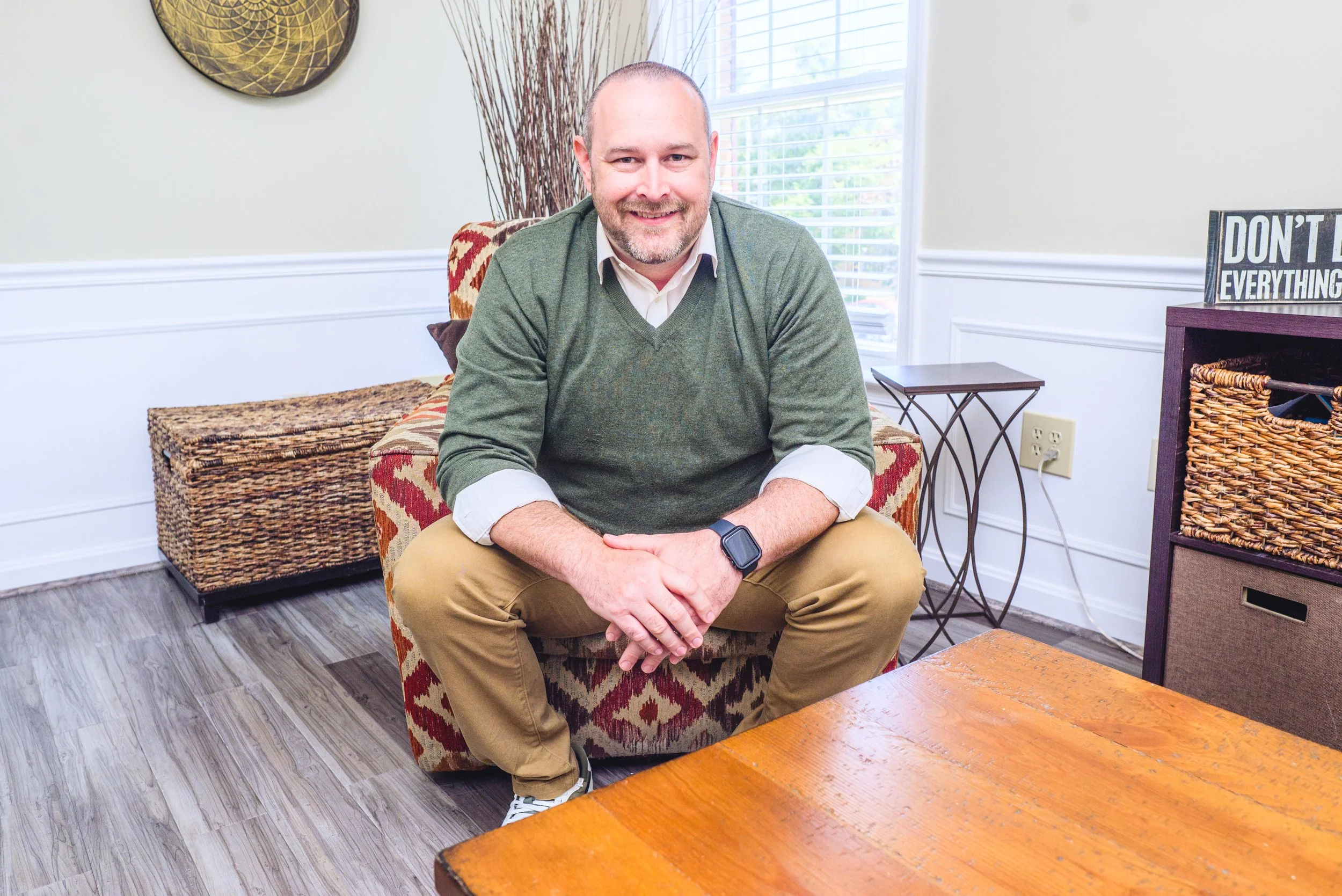
With Bradford Wolf, LCSW

It is usually the drive home that gets you. Replaying it. Hearing how you sounded. Seeing the face on someone you care about, which is the part that stays.
And you have apologized for this before, in close to the same words, which is its own problem.
Anger therapy treats anger that shows up bigger, faster, or more often than a situation calls for. The work is on what is driving it, not just on how to hold it back once it has already started.
I am Bradford Wolf, a licensed clinical social worker in Rockville, Maryland. I work with adults on this in person and by video across Maryland and Virginia, as part of my individual therapy practice.
This page covers what usually sits underneath anger, why the techniques you tried stopped working, and what the work involves. It also covers two situations where someone other than me is the right call, and those come first.
If you need a certificate for court, I am not the right person
Starting here because it saves you time.
If a court, a probation officer, or an employer has told you to complete anger management and produce documentation, that is a specific service and I do not provide it. I am a therapist. What you need is a provider who runs a structured class to a set curriculum and issues a certificate of completion. Those are widely available in Maryland, including online.
One piece of practical advice before you pay anyone. Check exactly what your order specifies, because requirements vary on format, number of hours, and whether the provider has to be approved by a particular court or agency. People lose money completing the wrong thing.
And an open door: some people finish the required course and then find they want to work on what was actually going on. That is a different conversation and you are welcome to have it here later.
Why counting to ten stopped working

You have probably already tried the standard advice. Count to ten. Breathe. Walk away. Maybe an app. Maybe a book someone gave you.
It worked for a while and then it did not, and you took that personally.
Here is what actually happened. Those techniques operate at the very end of a process. By the time you are counting, the anger has already arrived, your body is already committed, and you are trying to buy back a few seconds of choice at the last possible moment. That works when the underlying pressure is low. It fails exactly when the pressure is high, which is exactly when you needed it.
So the technique did not fail because you lack discipline. It failed because it was never designed to touch whatever is generating the pressure in the first place.
Skills are worth having. They are just not treatment, and confusing the two costs people years.
What is usually underneath it
Anger is rarely the first feeling. It is usually the second one, arriving over something harder to sit in: humiliation, fear, grief, or the specific misery of having no say in something that matters to you.
There is a reason anger is the one that surfaces. It mobilizes you instead of flattening you, and it feels like strength rather than exposure. For a lot of people, and for a lot of men in particular, it was also the only one that was ever allowed.
Three drivers come up often enough to name.
Something older. When the reaction is out of proportion to what just happened, it is sometimes in proportion to something else. Trauma does this reliably, and it is treated differently.
Depression. It does not always look like sadness. In plenty of people, particularly men, it shows up as a short fuse and no patience for anything.
Drinking. Alcohol does not create anger. It removes the gap between feeling it and acting on it, which is why the worst episodes so often have it somewhere in the background.
One thing worth clearing up, because people search for it: there is no such thing as an anger disorder. There is a narrow diagnosis called intermittent explosive disorder, and most people who struggle with their temper do not meet its criteria. Not having a diagnosis does not mean there is nothing to work on. It means anger is a symptom that travels, and the useful question is what it is traveling with.
If it has become physical
This needs saying plainly rather than carefully.
If your anger has become physical with a partner, individual anger therapy is not the right treatment for that. This is not squeamishness on my part. Intimate partner violence needs a specialized intervention program designed for it, and individual therapy is not a substitute. If that is your situation, tell me on the consultation call and I will help you find the right kind of program rather than take you on for something I should not be treating.
If you are reading this because someone else's anger has become physical toward you, that is a safety matter before it is a therapy matter. The Montgomery County Crisis Center is available 24 hours a day at 240-777-4000, in person at 1301 Piccard Drive in Rockville. The Family Justice Center at 240-773-0444 provides free services to victims of domestic violence, with walk-ins welcome. The National Domestic Violence Hotline is 1-800-799-7233.
If you are here because someone asked you to be
A fair number of people reading this did not choose to. A partner said something, or a manager did, and now here you are looking at a therapist's website feeling slightly ridiculous.
You can think the complaint is overstated and still get something out of this. Those two things are not in conflict, and you do not have to concede the argument before you walk in.
What will not happen: I am not going to take the other person's side by default, I am not going to require you to agree there is a problem before we start, and I am not going to spend fifty minutes itemizing what is wrong with you. That is not therapy and it does not work anyway.
What I will do is take your account seriously, look at what is actually happening, and tell you honestly what I see. If my assessment is that this is not worth working on, I will say that too. Come once and decide for yourself.

How I work with anger
-
We start by taking one specific incident apart. Not "what makes you angry" in general, but the actual chain: what happened in the ten minutes before, what you took it to mean, what your body did, what came out of your mouth. Most people have never slowed it down enough to see the steps. The steps are where the choices live.
-
Then the part underneath, which is where most of the change comes from. What the anger is standing in front of, where it learned to be the only available response, and what it is costing to keep running it. This is the piece a class cannot do, and it is the reason to be in therapy rather than in a course.
-
Yes, there are techniques, and I will teach them. They just work considerably better once there is less pressure behind the anger, which is why they come second here rather than first.
I should be clear about what changes and what does not. The anger will not go away, and I would not want it to. Anger is normal, and sometimes it is the correct response to something. What changes is the size of it, how often it fires, and the length of the gap between feeling it and doing something you regret.
Fifteen years in this work has been mostly with adults nobody would describe as angry people, which is generally who ends up in the chair. I am also trained in M-TREM, a trauma recovery model built for working with men, which comes up more often here than on any other issue I treat. My background has the details. I hold no anger-specific certification and I am not going to imply otherwise.
What it costs
A 50-minute session is $225. I am out of network, so you pay at the session, I give you a superbill, and you submit it for reimbursement. What comes back depends on your plan and your out-of-network deductible.
You may have noticed that anger management classes in this area run around $25 an hour. That is a real difference and it deserves a straight answer rather than a dodge.
They are different products. A class delivers a curriculum over a set number of hours, teaches a defined skill set, and ends. Therapy is open-ended work on whatever is generating the anger, and it does not follow a syllabus because your version of this is not the same as the next person's. Neither is better in the abstract.
If what you want is a structured skills course, take the class. It is cheaper and it will do what it says. If you have already done that kind of thing and found yourself back in the same place, that is useful information about which of the two you actually need.
And if the fee is out of reach, there are therapists in this area who take insurance and work with anger. What reimbursement depends on covers the mechanics if you want to work out your number first, and you can book the free 15-minute consultation to talk it through.
In person in Rockville, online across Maryland and Virginia
I see clients at 27 Wood Ln in Rockville, MD 20850, and by video anywhere in Maryland or Virginia. The two-state limit is a licensing rule rather than a preference, which is also why I cannot see you if you are sitting in the District.
One practical note for this particular subject: a lot of people working on anger have not told anyone they are doing it. Video means the session happens somewhere of your choosing rather than in a waiting room. Online therapy in Maryland and online therapy in Virginia cover how that works.
Anger sits next to several things that are treated differently, and ending up in the right room matters more than staying in this one.
If the reaction belongs to something older than whatever set it off, start with trauma therapy.
If underneath the irritability there is mostly flatness and exhaustion, look at depression.
If drinking is reliably somewhere in the picture when it goes worst, compulsive behavior is worth reading first.
If you recognize all of this and would rather read it framed directly for men, therapy for men covers the same ground.
And if the anger genuinely lives between two people rather than traveling with you, couples therapy is the better fit.
If this is really about something else
Common questions about anger therapy
-
No. I do not run classes and I do not issue certificates of completion for courts, probation officers, or employers. That is a separate service and there are providers in Maryland who specialize in it. Check what your order specifically requires before you pay anyone, because the requirements vary.
-
Not by itself. Anger is an emotion, not a diagnosis, and there is no such thing as an anger disorder. There is a narrow diagnosis called intermittent explosive disorder, but most people who struggle with their temper do not meet it. More often anger is a feature of something else, such as depression, trauma, or heavy drinking.
-
Then come once and find out. You do not have to agree with whoever sent you before you walk in, and I am not going to require an admission to start. If I look at what is happening and think there is nothing here worth working on, I will tell you.
-
No, and that is not the goal. Anger is a normal emotion and sometimes it is the right response. What changes with treatment is how big it gets, how often it fires, and how much room there is between feeling it and acting on it.
-
Yes, if the anger travels with you rather than living in the relationship. If it only shows up with one person and not anywhere else, couples work may be the better route. We can usually tell which is which in a single conversation.
-
It depends on how long the pattern has been running, what is driving it, and whether the situation around you is changing too. I will not give you a session count, because anyone quoting one before meeting you is guessing.
-
Yes, with narrow legal exceptions that I go through in the first session, mainly serious risk of harm and certain legal requirements. Describing things you have said or done in anger does not by itself trigger any of them.
Starting anger therapy in Maryland or Virginia
This is workable. It is also not a verdict on the kind of person you are, whatever the last argument suggested.
The consultation is fifteen minutes on the phone, it costs nothing, and it is a reasonable way to find out whether this is the right kind of help, including if the answer is no. I do not currently have a waitlist.
Book the free 15-minute consultation, or read more about individual therapy with me.
Sources
Montgomery County, Maryland Department of Health and Human Services, Crisis Center: 240-777-4000, 1301 Piccard Drive, Rockville. https://www.montgomerycountymd.gov
Montgomery County Family Justice Center: 240-773-0444, 600 Jefferson Plaza, Suite 500, Rockville. https://www.montgomerycountymd.gov
National Domestic Violence Hotline: 1-800-799-7233. https://www.thehotline.org