
Catholic Counseling in Maryland and Virginia
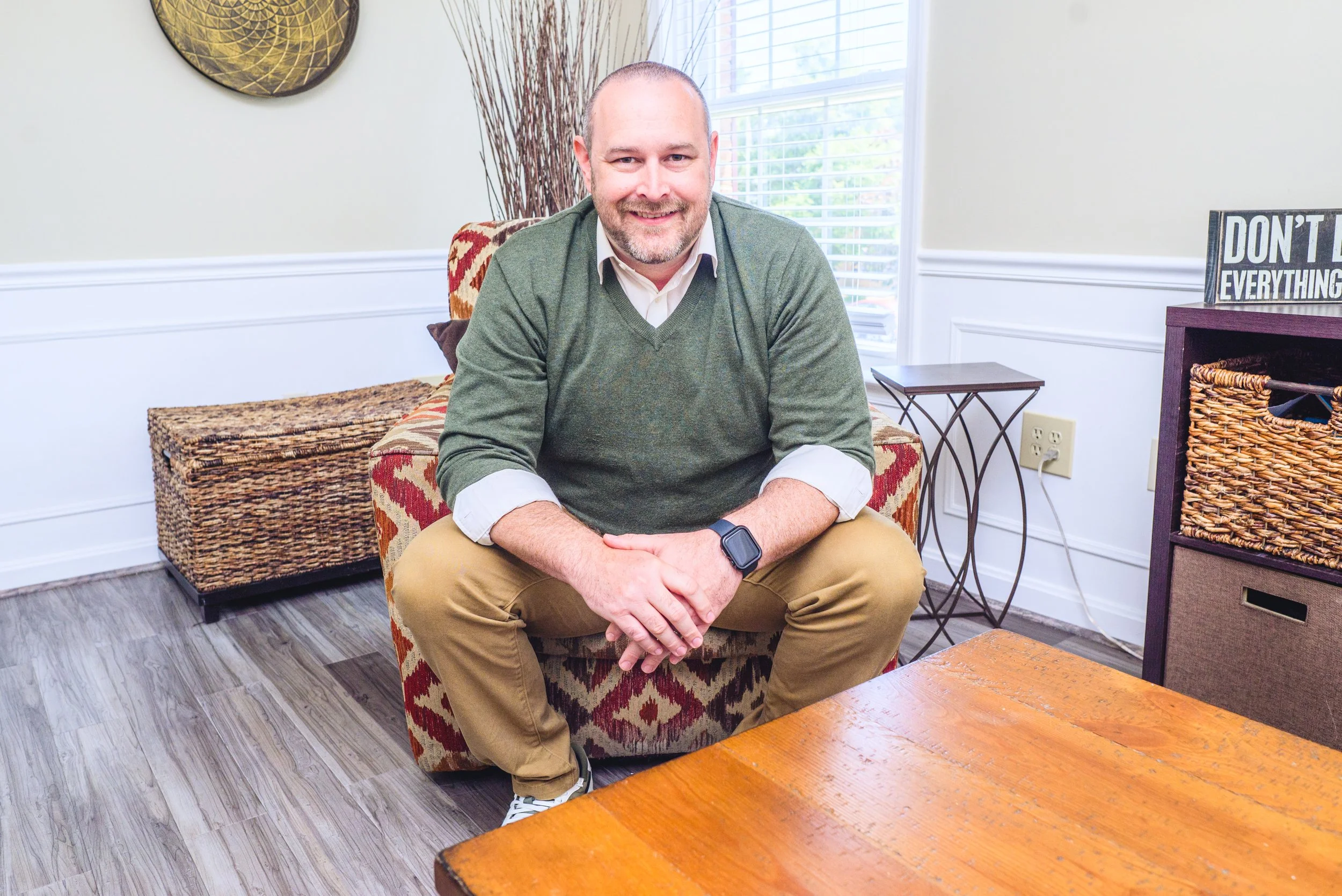
With Bradford Wolf, LCSW
You should not have to choose between your faith and getting help.
And you should not have to explain the faith to your therapist either. Not what Lent is, not why the annulment process matters, not why a decision that looks straightforward to everyone else is not straightforward to you.
But there is a second thing people worry about and rarely say out loud: that counseling built around the faith might turn out not to be much like therapy. That you will pay for fifty minutes and get something closer to a conversation you could have had after Mass.
I am Bradford Wolf, a licensed clinical social worker in Rockville, Maryland. I have been Catholic my whole life and I am active in my parish. I work with adults and couples in person and by video across Maryland and Virginia, as part of my individual therapy practice.
This page covers what faith-integrated actually means in a session, how this differs from spiritual direction, what happens when therapy and Church teaching seem to pull against each other, and what it costs.

Two ways this usually goes wrong
People come to this page because one of two things has already happened, or because they are trying to avoid both.
The first is a therapist who treats the faith as the thing to be worked on. Practice gets heard as rigidity. Belief gets heard as avoidance. Nothing is ever said directly, but the implied direction of travel is that you would be doing better if you believed less. If that has happened to you, you recognized it within about two sessions and you probably did not go back.
The second is less discussed and it is the reason some people never try faith-based counseling at all. Counseling can be so oriented around the faith that it stops functioning as therapy. Encouragement, scripture, and a general direction of hope, none of which is bad, and none of which is clinical work. It is difficult to spot from a website, and asking about it feels vaguely disloyal, so most people do not ask.
What I do is ordinary clinical therapy. Cognitive behavioral work, motivational interviewing, psychodynamic work, the same methods I would use with anyone. I happen to be Catholic, which means none of the context needs explaining and your faith is not something I am quietly trying to work around.
What faith-integrated actually means in a session

It is less mysterious than it sounds, and it is set by you rather than by me.
Think of it as a dial. At one end, we close sessions with prayer and your faith is actively part of the work. In the middle, it comes up when it is relevant and otherwise does not. At the other end, it never comes up at all, and the whole benefit is simply that you never have to preface anything with an explanation.
All three are normal. Most people move along that dial over time and nobody has to announce it.
Here is how the faith shows up in the actual methods when you want it to:
Cognitive behavioral work helps challenge the unhelpful thoughts that fuel guilt, fear, and stress, and replace them with balanced perspectives that are consistent with what you actually believe rather than in tension with it.
Motivational interviewing works on reflection and personal responsibility. What is happening, why is it happening, and what step is actually available to you.
Psychodynamic work connects how your past shapes what you are struggling with now, which for a lot of people includes making sense of what a difficult season might be revealing.
What integration is not: prayer instead of treatment, scripture used as the intervention, or any expectation that you participate in the faith side at all. If you would rather it stayed out of the room, say so on the first call and it stays out.
The practical version of all this is being able to say "I have not been to Mass in two months and I do not want to get into why yet" and have that simply land, without a follow-up question and without it becoming the topic.
This is therapy, not spiritual direction and not confession

Worth separating, because they get confused and they do different things.
Spiritual direction is about your relationship with God, guided by someone formed for that work. Confession is a sacrament, and I have no part in it. Therapy works on patterns in how you think, feel, and behave, using clinical methods, with a licensed clinician.
They are not substitutes and they are not in competition. If you have a spiritual director, keep them. Some things belong in that room rather than this one, and being clear about which is which tends to make both more useful.
One consequence worth stating: I am not a moral authority and I will not act as one. If what you need is a judgment about whether something was a sin, that is a conversation for a priest, and I will say so rather than improvise.
If you are not sure you count as a good Catholic right now
This is not an assessment. I am not evaluating your practice, and there is no standard of observance you need to meet before you are welcome here.
People come in who have not been to Mass in years. People who disagree with the Church about something specific, having thought about it carefully rather than casually. People who are divorced, or remarried, or in situations they have not resolved and may not resolve. People who are angry about something that happened in a parish. People who are not sure what they believe anymore and find that frightening.
None of that is a disqualification and none of it is the first thing we would work on unless you wanted it to be. It is material, the same as anything else, and it gets treated with the same seriousness.
I say this plainly because the language around Catholic counseling can read as a screening process, and a fair number of people conclude they would not pass. If that is why you have been putting this off, it is not a reason.
When therapy and Church teaching seem to pull in different directions
The real question underneath "will you respect my faith" is usually narrower: what happens if you tell me to do something I believe is wrong.
The answer is structural rather than case by case. I am not going to ask you to set your beliefs aside, and I am not going to pretend to be the authority on what your faith requires of you. When a clinical recommendation and your understanding of Church teaching appear to conflict, we name it out loud and work through it rather than quietly steering around it.
The line I hold is this: the moral question belongs to you and your priest. The clinical question, what is actually happening, what it is costing you, and what might change, belongs in here. I am not positioned to settle the first and I will tell you so.
A concrete example of how that plays out. Someone believes they should be able to forgive something, and they cannot, and the failure has become its own source of guilt. The clinical view is that forgiveness is not a switch and that forcing it usually does damage. That is a real tension. It does not require anyone to concede anything, and working on it honestly is more useful than either of us pretending it is not there.
When therapy and Church teaching seem to pull in different directions
The real question underneath "will you respect my faith" is usually narrower: what happens if you tell me to do something I believe is wrong.
The answer is structural rather than case by case. I am not going to ask you to set your beliefs aside, and I am not going to pretend to be the authority on what your faith requires of you. When a clinical recommendation and your understanding of Church teaching appear to conflict, we name it out loud and work through it rather than quietly steering around it.
The line I hold is this: the moral question belongs to you and your priest. The clinical question, what is actually happening, what it is costing you, and what might change, belongs in here. I am not positioned to settle the first and I will tell you so.
A concrete example of how that plays out. Someone believes they should be able to forgive something, and they cannot, and the failure has become its own source of guilt. The clinical view is that forgiveness is not a switch and that forcing it usually does damage. That is a real tension. It does not require anyone to concede anything, and working on it honestly is more useful than either of us pretending it is not there.
What I bring to this
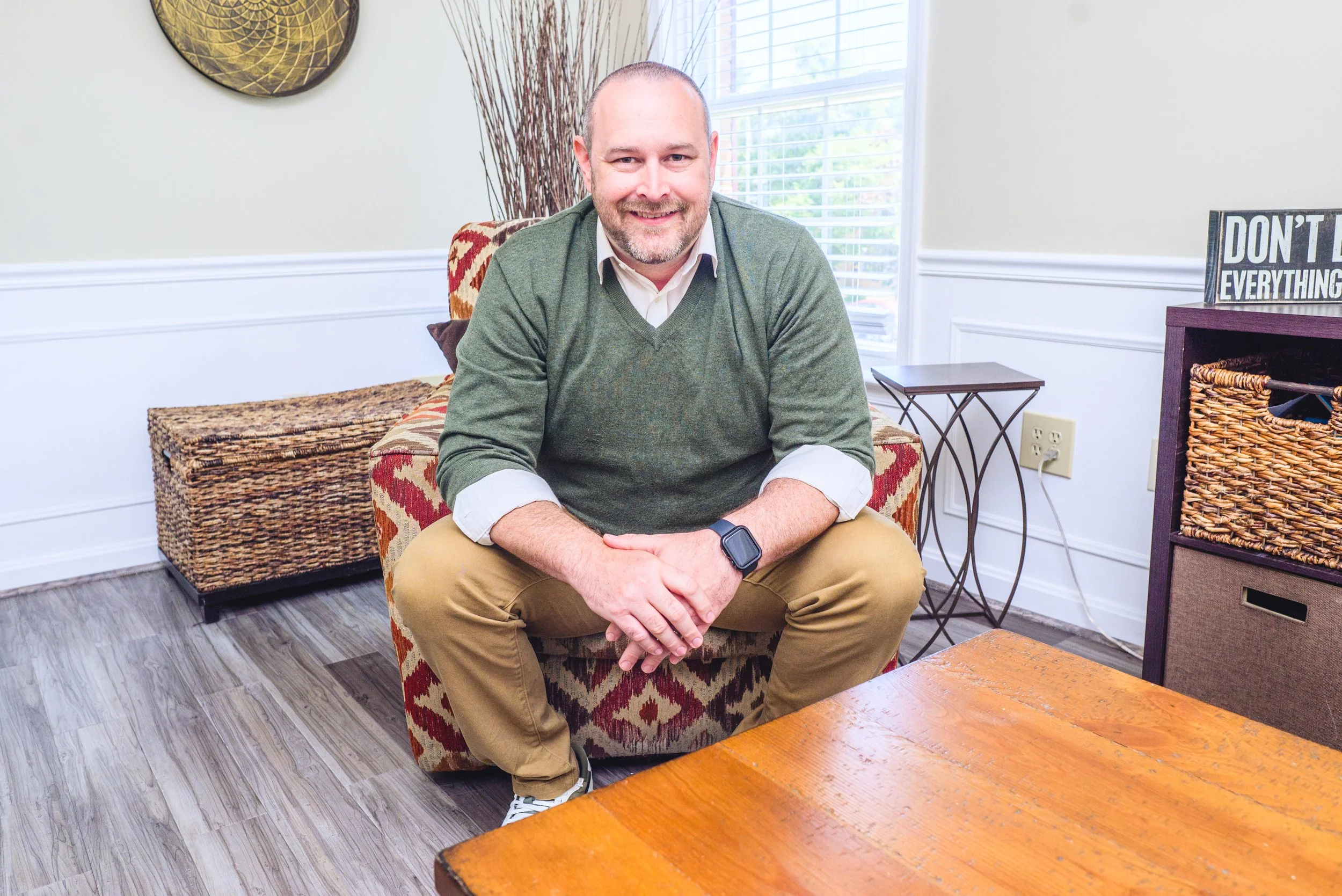
I have been Catholic my whole life, I am active in my parish, and I have led a number of Catholic marriage retreats as both a leader and head facilitator. That last one matters more than it might sound: it means a lot of hours spent with couples working through faith and marriage together, which is a different kind of experience than reading about it.
Professionally I am a licensed clinical social worker with over fifteen years in practice, and I am a Gottman trained couples therapist. My background covers the training and approach in more detail.
What I do not claim: any credential in Catholic orthodoxy, any endorsement from a parish or a diocese, or any authority to tell you what the Church teaches. I am a therapist who is Catholic, not a ministry, and the distinction is deliberate.
What people bring to me
The faith lens applies across whatever you are actually dealing with. These pages go deeper on each.
Anxiety, including the kind that attaches itself to scruples and decisions.
Depression, which for some people carries an extra layer about what it means to feel this way while believing what you believe.
Trauma, including things that happened in religious settings, which I will neither minimize nor make the whole story.
Compulsive behavior. Pornography is one of the most common things Catholic men bring in, and it is treatable ordinary clinical work rather than a character verdict. A page specifically on the Catholic side of that is coming.
Marriage, through couples therapy. Catholic marriage counseling and premarital work are getting their own pages.
One that deserves naming directly: scrupulosity. When religious anxiety becomes a loop of doubt, re-checking, and re-confessing that no amount of reassurance ever settles, that has a name, and it is recognized as a clinical presentation rather than a failure of faith or a lack of trust. It responds to treatment. A page on it is coming; in the meantime it is a reasonable thing to raise on a consultation call.
In person in Rockville, online across Maryland and Virginia
I see clients at 27 Wood Ln in Rockville, MD 20850, and by video anywhere in Maryland or Virginia. The two-state limit is a licensing rule, which is also why I cannot see you if you are sitting in the District.
In-person is genuinely available, which is worth saying because a good deal of Catholic counseling in this area is telehealth only. If sitting in a room with someone matters to you for this, it is an option here. Online therapy in Maryland and online therapy in Virginia cover how the remote version runs.
Common questions
-
Only if you want to. Some clients close with prayer, some want their faith actively worked with throughout, and some never bring it up at all. Any of those is fine, you set it, and you can change your mind at any point without making it a discussion.
-
No. Spiritual direction concerns your relationship with God and is guided by someone formed for that. This is clinical therapy, using clinical methods, with a licensed clinician. They complement each other and neither replaces the other. If you have a spiritual director, keep them.
-
You are welcome. There is no standard of observance required here and I am not assessing your practice. People come in lapsed, doubting, angry, or somewhere they have not worked out yet, and all of it is workable material rather than a disqualification.
-
No. I am not a moral authority and I will not act as one. If a clinical recommendation and your understanding of Church teaching seem to conflict, we name it and work through it. The moral question is yours and your priest's; the clinical question is the one I can help with.
-
Yes. It is a recognized clinical presentation rather than a spiritual failure, and it responds to treatment. If your experience is a loop of religious doubt, re-checking, and re-confessing that reassurance never settles, that is worth raising on a consultation call.
-
No. I am out of network with all plans and do not bill insurers directly. You pay at the session and I provide a superbill you can submit yourself. If cost is a barrier, parish and diocesan counseling programs in this area are worth looking into.
-
Yes, with narrow legal exceptions I go through in the first session. Nothing you say here reaches your parish, your pastor, or anyone you might see on a Sunday. If you are in crisis or having thoughts of suicide, call or text 988 for the Suicide and Crisis Lifeline, any time.
Starting Catholic counseling in Maryland or Virginia
Two things this page is meant to settle. Your faith will not be treated as the problem, and this will still be real clinical work.
The consultation is fifteen minutes, costs nothing, and is a reasonable place to ask the faith questions directly before you commit to anything. If I am not the right fit, I will say so and point you somewhere better. I do not currently have a waitlist.
Book the free 15-minute consultation, or read more about individual therapy with me.